
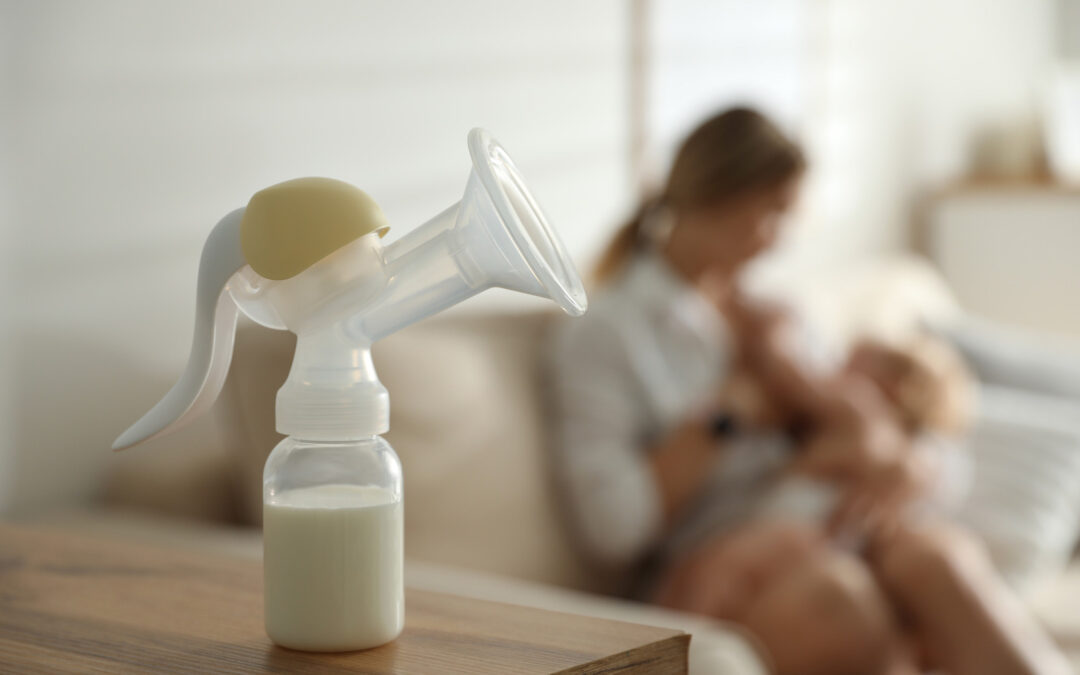
When Should You Start Pumping When Introducing a Bottle?
You’ve been exclusively breastfeeding for the first few weeks, and things are going well.
Now you’re ready to introduce your baby’s first bottle.
But one question immediately follows:
“When am I supposed to pump?”
The answer depends on your goals, but for most exclusively breastfeeding families who are introducing one practice bottle each day before returning to work, the plan can be surprisingly simple.
Refer back to our July 22nd post for information on when to introduce your baby’s first bottle.
Start with breastfeeding
During the first couple of weeks after birth, your priority is learning to breastfeed and establishing your milk supply.
If breastfeeding is going well, there’s usually no need to begin pumping immediately.
Once breastfeeding feels comfortable and you’re ready to introduce a bottle—often around 2 to 3 weeks—that’s when pumping naturally becomes part of the picture.
Before the first bottle
Many parents wonder where the milk for that first bottle comes from.
If you haven’t been pumping, don’t worry.
In the day or two before introducing your baby’s first bottle, you can try pumping after a few nursing sessions. You may only collect a small amount after your baby has already eaten, and that’s completely normal.
Remember, your baby has already removed most of the available milk.
Even collecting a little at a time can be enough to prepare for your baby’s first bottle.
Once your baby is taking one bottle each day
After your baby begins accepting one bottle each day, your pumping routine becomes much simpler.
Pump when your baby gets a bottle.
That’s it.
When your baby drinks milk from a bottle instead of nursing, pumping at that same time helps tell your body that milk is still needed.
For many families, this becomes an easy rhythm:
- Baby gets one bottle each day.
- You pump during that feeding.
- The milk you pump can often be used for tomorrow’s bottle.
This creates a sustainable routine without adding unnecessary pumping sessions.
What if I don’t pump much?
One of the biggest surprises for new parents is how little milk they collect after nursing.
It’s easy to assume something is wrong.
Usually, it isn’t.
If your baby has just finished feeding, there simply isn’t much left to express at that moment.
Small pump volumes after a nursing session are completely expected.
Over time, as your body learns that milk is also needed during your pumping session, many parents notice their output gradually increases.
Keep it simple
Social media can make pumping feel overwhelming.
You might see freezers full of milk or schedules that involve pumping after every feeding.
For most exclusively breastfeeding families introducing one daily practice bottle, it doesn’t have to be that complicated.
Focus on establishing breastfeeding first.
Introduce your baby’s bottle.
Pump when your baby gets that bottle.
Then let your routine grow from there.
Looking ahead
Many parents wonder when they should start building a freezer stash.
The good news is that you don’t need to have hundreds of ounces stored before returning to work.
We’ll cover freezer stashes, how much milk you actually need, and when to start building one in next week’s blog.
The bottom line
Pumping doesn’t have to begin the moment your baby is born.
For many families, it fits naturally into the feeding routine once a daily bottle is introduced.
By keeping things simple and matching your pumping session to your baby’s bottle, you’re supporting your milk supply while creating flexibility for the future—without adding more work than necessary.
Check out Ashlee’s current fave wearable pump here.